Premium solution for clear vision
Cataract surgery and vision correction lens implantation
Cataract surgery is the only effective solution that restores the sharpness and colors of the world. At our clinic, you can achieve the freedom of sharp vision with the most modern technology and personalized artificial lenses.
At Saint James Clinic, we perform nearly two thousand cataract surgeries each year, with the help of our experienced doctors and caring team.

Painless procedure, only 10-15 minutes long

Modern contact lenses tailored to your needs

Fast recovery, sharper vision in a short time
Cataract surgery without fear
A safe and painless option under general anaesthetic at Saint James Clinic
In this video, we show the option of surgery under general anaesthetic at our clinic, and the modern, comfortable ward where patients can rest after the procedure, which takes just a few hours.
- Painless procedure under general anaesthetic
- An exclusive option in a private clinic setting
- A safe, supportive and modern environment
- A quick process that takes just a few hours
- A high-standard, sterile surgical environment with experienced specialists
Who is cataract surgery a good choice for?
Cataract surgery is ideal for those whose deteriorating vision can no longer be corrected with glasses and who want to see clearly and sharply again. Thanks to modern intraocular lenses, the procedure not only removes the cataract but can also reduce dependence on glasses. At our clinic, the treatment can even be performed under general anaesthetic.
We recommend it if:
- His vision is so blurry that it's very disruptive in everyday life.
- Colors appear duller, making it harder to see details
- You experience severe glare and halos while driving at night
- You often need to change the diopter of your glasses
- Would you like to see clearly at all distances again?
Important to know over 45 years of age: Due to the natural aging of the lens of the eye, the ability to focus up close gradually decreases. This is why patients at this age may need reading glasses after surgery, even if they can see clearly at a distance.
When is cataract surgery not recommended?
There are rare cases where cataract surgery is not the right solution. In these cases, our ophthalmologists will help you find a safe alternative.
Most common reasons for exclusion:
- Untreated serious general illness
- Active ocular inflammation or infection
- Advanced glaucoma in which the risks of surgery would outweigh the expected benefits
- An ophthalmological abnormality that in itself limits the possibility of improving vision
The exact answer is always given during a personal, detailed suitability assessment. If you are not suitable, our doctors will recommend another safe option.
Process
This is how cataract surgery works, step by step
Every step of cataract surgery is pre-planned and safe. We guide you through the entire process, from the eligibility assessment to post-operative check-ups, so you know exactly what to expect.
The surgery is always preceded by a detailed, painless examination. During this, our specialists check the general condition of the eye, the thickness of the cornea, the intraocular pressure and the retina. Based on the results, they determine whether you are suitable for the procedure and which type of artificial lens will provide the best result.
Period: ≈ 60–90 minutes
More information
The suitability assessment will include the following:
- Accurate measurement of diopter, cylinder, and corneal thickness.
- Tear film and pupil examination (with pupil dilation).
- Slit lamp examination of the anterior segment and fundus (pupil dilation with eye drops).
- Medical consultation: discussing results, answering questions.
Practical information:
- It is recommended to remove soft contact lenses 3 days before the examination, and hard lenses 3 weeks before.
- Blurred vision may occur for 2-3 hours due to dilation; avoid driving during this period.
- Bring your previous eye tests with you, if you have any.
Outcome:
- A clear yes/no decision about surgery or an alternative suggestion.
- Personalized treatment plan and timing.
Cataract surgery is completely painless with local anesthetic eye drops. Before the surgery, our doctors will discuss the steps, benefits, and potential risks of the procedure in detail. You will receive written information and a consent form for the surgery, which must be signed on the day of the surgery.
Period: ≈ 15–20 minutes for both eyes
More information
Steps in brief:
- Preparation, disinfection, application of eyelid speculum
- Making a small incision of approximately 2 mm on the cornea
- Removal of the natural lens of the eye using ultrasound waves
- Implanting the artificial lens into the lens capsule
- Short rest, then the patient can go home with an escort
Please note this:
- Do not use makeup, perfume, or hair products containing alcohol for 3-4 days before surgery.
- We recommend that you avoid drinking alcohol 24 hours before and 48 hours after surgery.
- Bring quality sunglasses due to light sensitivity.
- Arrange for transportation home.
Recovery after cataract surgery is quick and predictable. Most patients experience sharper vision the day after surgery, but full visual acuity gradually stabilizes over the next few days. Mild blurring, light sensitivity, or tearing may occur during the initial period. These are natural, temporary phenomena.
Period: ≈ 24-72 hours
More information
The first 24–72 hours:
- Tearing, stinging, and sensitivity to light may occur for a few hours — this is normal.
- Rest with your eyes closed for 3–4 hours after surgery.
- Use the eye drops prescribed by your doctor according to protocol.
- Don't rub your eyes.
- Screen: with short segments, frequent blinking, artificial tears.
Returning to daily routine after lens surgery:
- Work: for office work usually after 2–3 days.
- Driving: typically after the first check-up, with medical approval.
- Swimming/sauna: typically recommended after 5-6 weeks.
(Of course, everyone heals at a different rate, so always follow your doctor's instructions.)
Follow-up examinations are key to safety and long-term success. These are short, painless check-ups where our doctors check the condition of your IOL, the healing process, and answer any questions you may have.
Period: ≈ 1-3 months
More information
Mandatory follow-ups:
- 24-hour control: On the first day, we check the implantation of the artificial lens and the condition of the eye.
Our doctors are available throughout your recovery, answering any questions you may have and adjusting your aftercare plan if necessary.

Results
Results after cataract surgery
Cataract surgery is one of the safest and most commonly performed eye procedures in the world. With the help of a modern artificial lens, the vast majority of patients quickly regain sharp vision and can enjoy the colors and details of the world again.
A safe, lifelong solution
The artificial lens implanted during cataract surgery is durable, does not wear out or deteriorate, and thus provides a lifelong solution for clear vision.
- Sharper vision on the day of surgery, with results stabilizing within a few days.
- Complete or partial glasses independence with premium intraocular lenses (trifocal, EDOF).

What did our patients experience after treatment?
A durable, lifelong solution
The artificial lens does not deteriorate or age, providing lasting results.
Natural colors and contrasts
Clearer, more vivid vision as the haze disappears.
Safe vision in all situations
Safer, clearer vision for night driving.
Cataract surgery is now a routine, safe procedure. It is successfully performed on more than 20 million patients worldwide each year. Thanks to modern artificial lenses, not only does blurred vision disappear, but our patients can often achieve complete independence from glasses.
Dr. Kristóf Perényi, chief physician and clinic director
Reviews
Our patients' opinions about cataract surgery
The greatest comfort is often not in the numbers, but in the experiences of other patients. Learn their stories and hear how clear vision has changed their everyday lives.
The story of János Lakatos' cataract surgery
János Lakatos' worsening cataract problem made everyday tasks increasingly difficult, which is why he decided to have lens surgery at Saint James Clinic.
At Saint James Vision and Aesthetics Center, not only technology but also care is top-notch. Our doctors and the entire team work every step of the way to ensure you enjoy clear vision safely and with satisfaction.
Personalized treatment
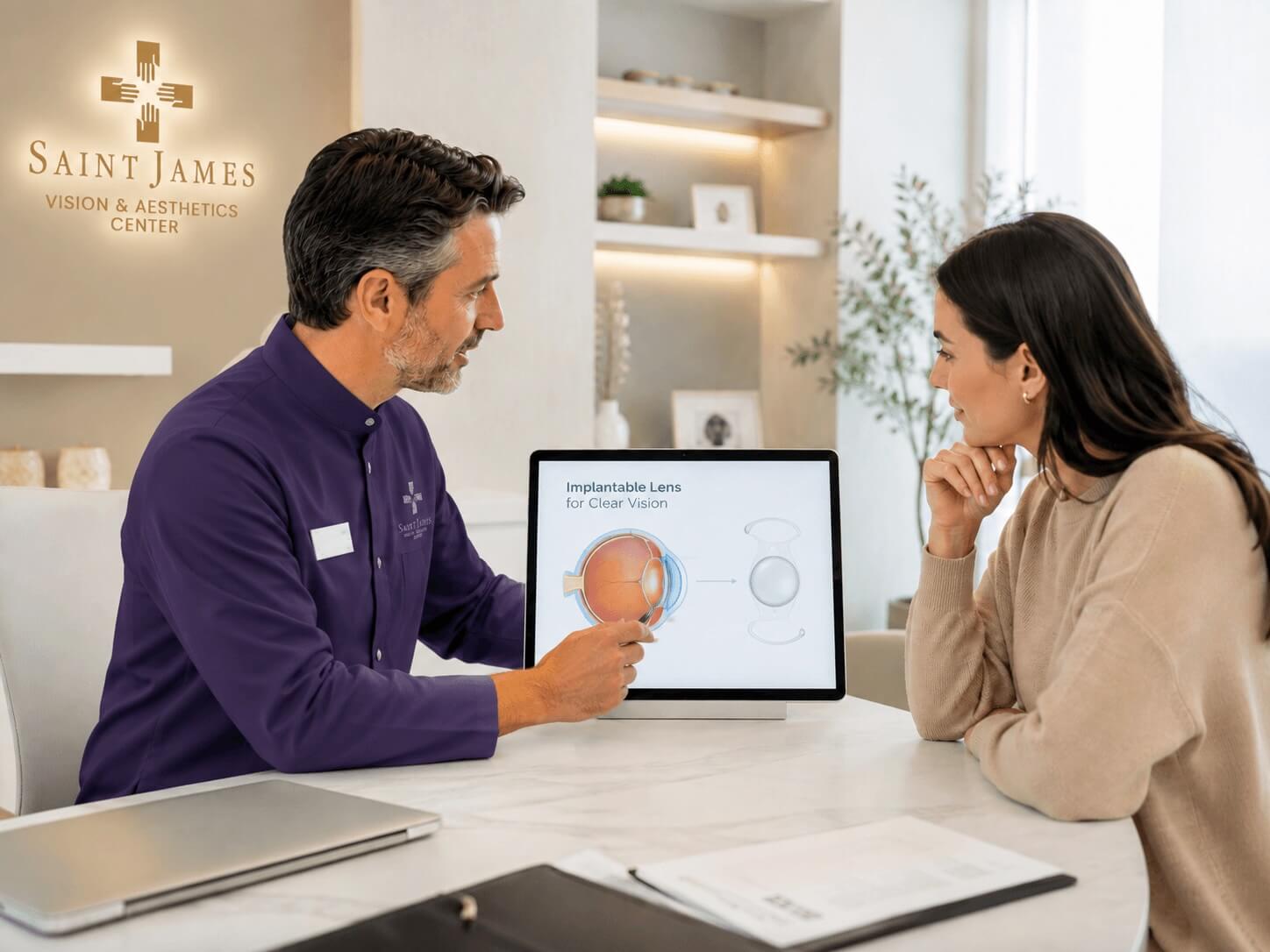
How is cataract surgery performed?
The essence of cataract surgery is to remove the cloudy, cloudy lens and replace it with a modern, clear artificial lens.
This artificial lens takes over the role of the original lens: It refracts the light and focuses it on the retina, so you can see clearly again, without distortion.
The world of modern contact lenses: sharp vision in every situation
The key to the success of cataract surgery is choosing the right intraocular lens. At our clinic, you can choose from several premium solutions that provide a long-lasting and natural vision experience.
Monofocal intraocular lens
Provides sharp vision at a specific distance (usually far away). Simple, reliable solution, may require glasses for reading.
Extended focus lens
It provides better vision at both near and intermediate distances, for example when using a monitor. A natural viewing experience, fewer compromises.
Multifocal / trifocal intraocular lens
It provides sharp vision at near, intermediate and far distances. It helps you to completely abandon glasses and is a lifelong solution.
Toric intraocular lens
It is used to correct astigmatism. When combined with other types of intraocular lenses, it provides complete correction.

Focus on safety
Safety and risks of cataract surgery
Cataract surgery is the most commonly performed eye procedure in the world, with millions of successful surgeries performed annually. At our clinic, we use only premium CE and FDA-approved lenses, under strict hygiene and surgical protocols.
Like all eye surgery, there may be temporary side effects, but these are typically mild and manageable.
Occasional, temporary symptoms may include:
- Dry eyes or tearing
- Sensitivity to light, glare at night
- Short-term foreign body sensation
- Slight blurring in the first few days of recovery
What we do for safety:
- State-of-the-art diagnostic and surgical devices (FDA and CE approved)
- Experienced ophthalmologists who have performed thousands of surgeries
- Strict hygiene and surgical protocols
- Regular check-ups until full recovery


According to international statistics, cataract surgery is a safe procedure: more than 98% of patients experience significant vision improvement, and serious complications occur very rarely.
Prices and financing
Transparent cataract surgery prices, no hidden costs
During cataract surgery, the cloudy, cloudy lens of the eye is replaced with a modern artificial lens. The price depends on the type of lens chosen. At our clinic, we use only premium artificial lenses with CE and FDA approval.
Monofocal intraocular lens
HUF 357,000 - 467,000 / eye
New generation monofocal intraocular lens
HUF 407,000 - 517,000 / eye
Premium extended focus intraocular lens
HUF 613,000 - 832,000 / eye
Premium trifocal contact lens
HUF 619,000 - 867,000 / eye
For astigmatism-correcting (toric) lens surgery – monofocal, multifocal or premium multifocal – the prices shown already include the additional cost of the toric lens.
Discounts
- For our rural patients 5000 HUF travel allowance
- With student ID 10,000 HUF extra discount
Financing
At Saint James Vision and Aesthetics Center, it is important to us that treatment can be planned financially, which is why we offer several financing solutions:
Instalment payment
Our clinic offers flexible instalment payment plans.
For more information, see the Instalment payment page.
Health fund settlement
Available for the full amount
About us
Our doctors and team - professional experience, personal care
Cataract surgery is performed at Saint James Clinic by experienced ophthalmologists who bring their domestic and international experience to the service of our patients. In addition to professional knowledge, personal attention and care are also our core values.


Dr. Kristóf Perényi, chief physician and clinic director
An ophthalmologist who graduated from Semmelweis University and acquired the most modern surgical techniques in foreign training courses. techniques.
Mission: to provide a safe, natural vision experience for all of its patients.
Security and support throughout the entire process
The key to success is not only the expertise of the doctor, but also the cooperation of the entire team – from assistants to coordinators to colleagues performing follow-up examinations. This is how we ensure that all our patients feel safe and supported during surgery.
Questions and answers
Frequently asked questions about cataract surgery
We have collected the most common questions to help you navigate before and after cataract surgery.
What is cataract?
Cataracts are clouding of the lens of the eye, which causes gradual vision loss, blurred vision, and sensitivity to light.
When is surgery necessary?
When vision becomes impaired in everyday life (reading, driving, working), surgery is recommended. Cataracts do not improve on their own, they can only be treated with surgery.
Is the procedure painful?
No. The surgery is completely painless with local anesthetic eye drops. The patient may feel only a slight pressure sensation.
How long does the surgery take?
Usually 10–15 minutes per eye.
How fast is the recovery?
Vision is sharper the day after surgery and stabilizes within a few days. Light daily activities can be performed soon, but intensive sports and swimming should be delayed for about 2–3 weeks.
What types of lenses can I choose from?
Monofocal, extended focus (EDOF), trifocal and toric lenses are available. Your doctor will recommend the most suitable one based on your examination and lifestyle.
Is it possible that I will still need glasses after the surgery?
Yes, with monofocal lenses, glasses may be needed for reading. With premium (EDOF/extended-focus, trifocal) lenses, most patients will be glasses-free.
What are the risks of surgery?
As with any procedure, there may be temporary side effects (photosensitivity, mild dry eyes, foreign body sensation). Serious complications are very rare, thanks to modern technology and strict protocols.
When can I drive again?
Usually after the first check-up, with medical approval.
Is there an option to pay in instalments?
Yes, the cost of the surgery can be paid in pre-planned monthly installments, including health fund settlement.
Book an appointment
Take the first step towards insight with us.
The first step in cataract surgery is a detailed, painless suitability assessment. This will give you an accurate answer as to whether the procedure is right for you.
Online appointment booking for suitability assessment
Complete an online suitability assessment
We provide the opportunity to complete an online suitability test, during which you can find out which type of treatment is the most ideal choice for you.
The test will take no more than 5 minutes to complete.
- Bécsi út 68-84, 1034 Budapest
- recepcio@stjameshospital.hu
- +36 1 788 2927
Contact
Location and access to Saint James Vision and Aesthetics Center
Saint James Vision and Aesthetics Center is located at 1034 Budapest, Bécsi Street 68-84. You can find it in an easily accessible location.
Whether you are coming from Budapest or from another part of the country, we welcome you in a discreet and premium environment, in comfortable and relaxed conditions.
Access and parking:
- Private parking in the clinic's underground garage (prior arrangement required, parking is subject to a fee)
- Easily accessible by public transport (bus and tram stops nearby)
- We provide detailed guidance and travel assistance for those arriving from outside the city.