The hidden dangers of diabetes for the eyes
Eye examination for diabetics at Saint James Vision and Aesthetics Center
Diabetes can damage your eyes without any symptoms. Timely eye check-ups can help prevent complications that can lead to serious vision loss or blindness. At our clinic, we use modern diagnostic tools, retina specialists, and personalized care to ensure the safety of your vision.
Why is eye examination important for diabetics?
Diabetes can damage the eyes insidiously, without symptoms. Many people only notice it when their vision becomes blurry, they see floating spots, or they have problems with everyday activities (reading, driving).
Prevention
Early treatment can prevent serious vision loss.
Security
Modern tests are painless and accurate.
Peace of mind
With an annual check-up, you can be sure that you will not miss out on the necessary treatment.
Understandable information
Our specialists will explain in detail what you can expect, so you don't have to gather information from forums.
Health status
The test takes into account your diabetes and general health.
Who is recommended for an eye examination in diabetes?
Diabetes poses a risk to eye health for everyone involved, so regular check-ups are recommended for all diabetics.
We recommend it if:
- For both type 1 and type 2 diabetes sufferers.
- For newly diagnosed patients with immediate ophthalmological examination.
- For long-term diabetics who are at higher risk of complications.
- It is also advisable to have your eyes checked if you have gestational diabetes.
Process
This is how an eye examination for diabetics is done step by step
For information about each step, click on the step title.
The first step is to review the administration and medical history. We record the duration of diabetes, blood sugar levels and treatment data, and eye complaints.
Period: ≈5–10 minutes
More information
Practical information:
- Bring your previous ophthalmological documentation and lab results (HbA1c, blood sugar level).
- If you are taking medication or insulin, write down the exact names and dosage.
We use instrumental examinations to check visual acuity, refractive errors, and intraocular pressure. These examinations are completely painless.
Period: ≈10–15 minutes
More information
Practical information:
- If you wear contact lenses, it is advisable to arrive with glasses.
- The measurements are quick and do not require anesthesia.
The ophthalmologist will examine the anterior segment of the eye with a slit lamp, then dilate the pupil and examine the fundus and retina in detail. If necessary, an OCT or fundus photograph will be taken to detect early signs of diabetic retinopathy.
Period: ≈10-15 minutes
More information
Practical information:
- Blurred vision may occur for 2–3 hours after mydriasis, so driving is not recommended.
- Bring sunglasses to protect yourself from the bright light after the exam.
At the end of the examination, the doctor will discuss the findings, explain the condition of the retina and what to do next. If necessary, he or she will recommend laser treatment, injection therapy, or frequent check-ups.
Period: ≈ 5-10 minutes
More information
Practical information:
- You will receive a written report that your other doctors (e.g. diabetologist) can also use.
- Feel free to ask questions: it is important that you clearly understand the suggestions and next steps.
At Saint James Vision and Aesthetics Center, not only technology but also care is top-notch. Our doctors and the entire team work every step of the way to ensure you enjoy clear vision safely and with satisfaction.
Security and professional background
Recognizing the ocular complications of diabetes requires special professional attention. At our clinic, we use the most modern diagnostic tools, with safe and painless examination methods. Our goal is to detect even the smallest changes in time, thus preventing more serious vision impairment.
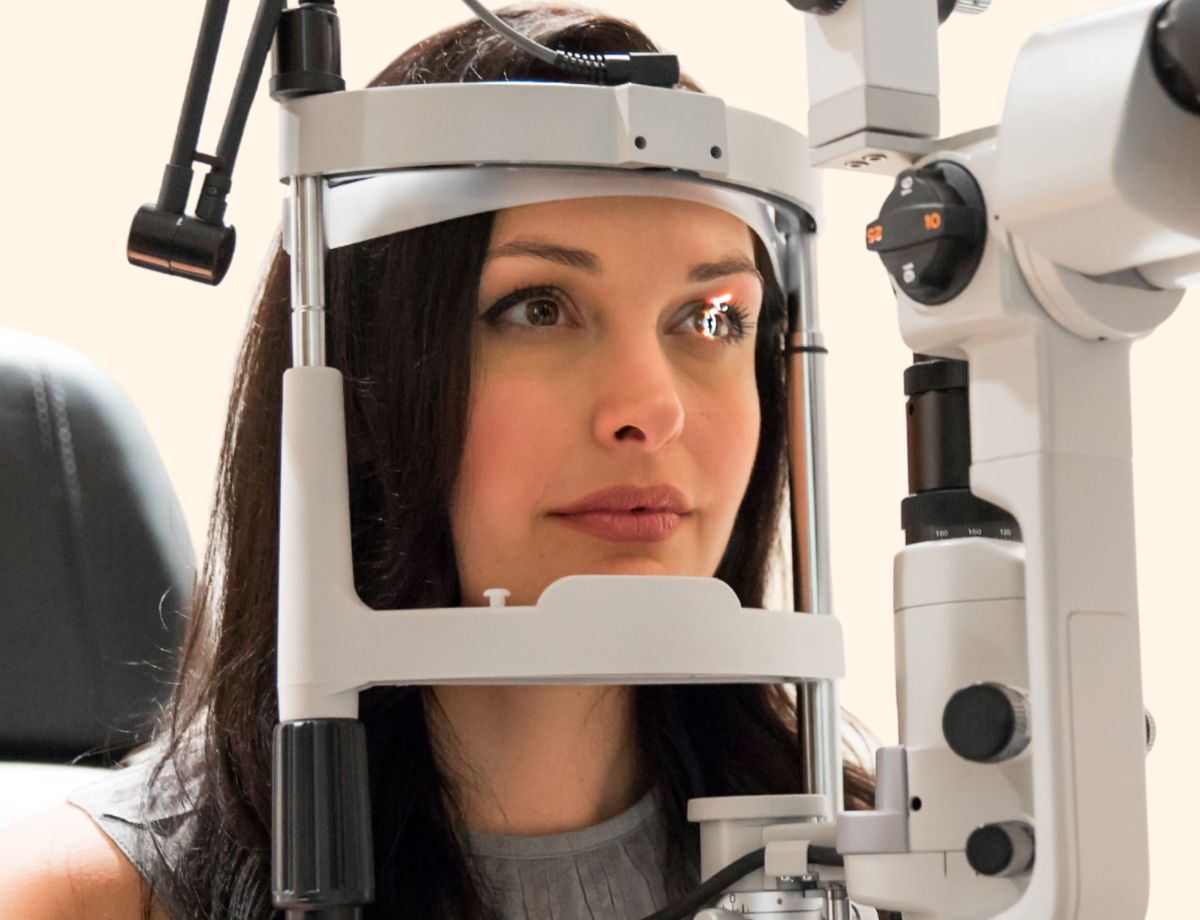
Tools and methods for eye examination of diabetic patients
- Visual acuity test chart: for checking nearsightedness and farsightedness
- Automatic refractometer: provides accurate measurement of refractive errors
- Tonometer: for early detection of glaucoma
- Slit lamp: provides a magnified view of the front of the eye and the retina
- Fundus camera and OCT: state-of-the-art imaging of the retina, optic nerve and circulation

Focus on safety
Security guarantees
At Saint James Vision and Aesthetics Center, modern technology and specialist medical experience combine to provide the safety that diabetic patients especially need.
- Non-invasive, completely painless examinations
- Use eye drops if necessary (e.g. to dilate the pupils)
- Hygienic, premium and discreet clinical environment
- Specialists experienced in recognizing changes caused by diabetes


If you have any questions or concerns, our doctors will discuss your options in detail. It is important to us that you make your decision with complete safety and confidence.
Transparent prices, no hidden costs
The ophthalmological examination of diabetic patients is complex, as it also includes a detailed examination of the condition of the fundus and retina. At our clinic, we help patients with transparent prices, health insurance billing options, and convenient instalment payments.
Ophthalmological examination of diabetic patients + OCT
45.000 Ft
About us
Experienced doctors, caring team
The examinations are performed by our experienced specialists, who have decades of experience in recognizing the ocular complications of diabetes. Our assistants and coordinators support you every step of the examination, so that you can participate in the check-up in a calm, attentive environment.


Dr. Kristóf Perényi, chief physician and clinic director
As the professional leader of the Saint James Vision and Aesthetics Center, he has outstanding experience in vision-improving interventions and the diagnosis of general ophthalmological problems.
Security and support throughout the entire process
During the examination, not only the doctor, but also a prepared professional team is at your disposal: optometrists, assistants, and patient coordinators will ensure that everything goes smoothly.
With us, every patient can expect to receive personalized attention from check-in to discussion of results.
Questions and answers
Frequently asked questions about eye examinations for diabetics
We have collected the most frequently asked questions so that you know exactly what to expect during the examination.
Is a referral required for the examination?
No, you can book an appointment directly at our clinic.
Is the examination painful?
No, the examinations are completely painless. If necessary, eye drops are used to dilate the pupils, which may cause temporary blurred vision, but is not painful.
How often should you have an eye check-up if you have diabetes?
It is usually recommended annually, and in some cases (for example, in the case of existing retinopathy) even every six months. The doctor will always give you a personalized recommendation.
What changes can the examination detect?
The most common are diabetic retinopathy and macular edema, but the risk of cataracts and glaucoma can also be screened.
Is it true that diabetes can lead to blindness?
Unfortunately, if left untreated, it can lead to blindness, which is why regular check-ups are essential. The good news is that vision loss can be prevented by early detection and treatment of complications.
What treatments can I expect if a discrepancy is found?
The most common are retinal laser treatment and intravitreal injections (e.g. Lucentis, Avastin), but in many cases regular monitoring and medication are sufficient.
Should I be afraid of treatments?
Many people are afraid of injections and laser treatments, but both are quick and less uncomfortable than expected. Our doctors will inform you in detail about every step and will constantly monitor you.
How long does the examination take?
Usually 45–60 minutes, depending on whether pupil dilation and additional testing (e.g. OCT) are required.
Can the test have side effects?
After mydriasis, you may experience temporary blurred vision and sensitivity to light for a few hours. It is advisable to arrive with an escort in such cases.
Will the test affect my diabetes treatment?
No. Ophthalmological examination does not replace diabetes control, but it closely complements it. The best results are achieved by cooperation between the two disciplines.
Book an appointment
Apply for testing by filling out the form
A short, painless examination is enough to get an accurate picture of the condition of your eyes and, if necessary, to start treatment in a timely manner.
Online appointment booking for suitability assessment
Complete an online suitability assessment
We provide the opportunity to complete an online suitability test, during which you can find out which type of treatment is the most ideal choice for you.
The test will take no more than 5 minutes to complete.
- Bécsi út 68-84, 1034 Budapest
- recepcio@stjameshospital.hu
- +36 1 788 2927
Contact
Location and access to Saint James Vision and Aesthetics Center
Saint James Vision and Aesthetics Center is located at 1034 Budapest, Bécsi Street 68-84. You can find it in an easily accessible location.
Whether you are coming from Budapest or from another part of the country, we welcome you in a discreet and premium environment, in comfortable and relaxed conditions.
Access and parking:
- Private parking in the clinic's underground garage (prior arrangement required, parking is subject to a fee)
- Easily accessible by public transport (bus and tram stops nearby)
- We provide detailed guidance and travel assistance for those arriving from outside the city.