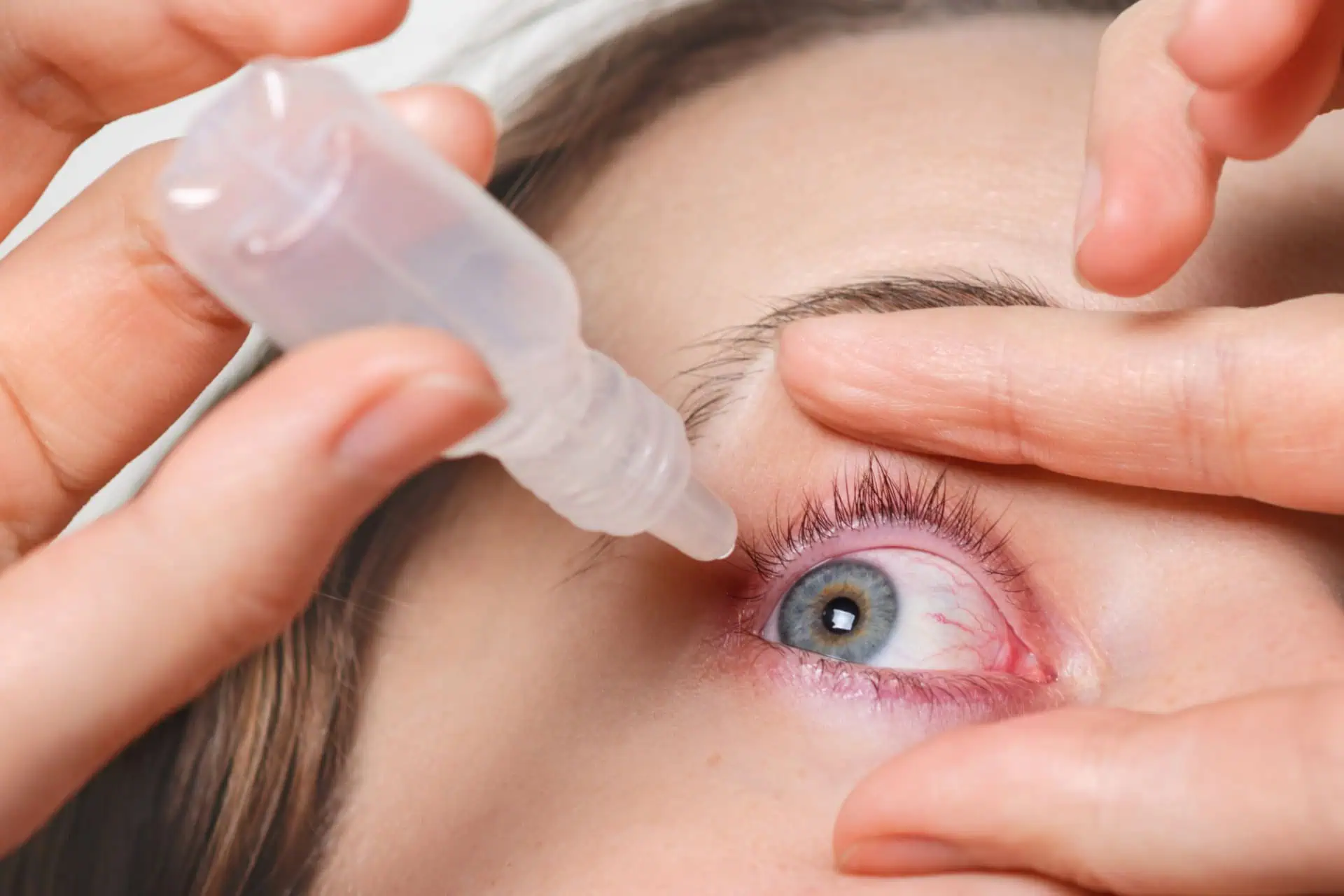
Dry eye is one of the most common eye complaints today, affecting hundreds of millions of people worldwide. Long hours in front of screens, air-conditioned offices, wearing contact lenses and the natural ageing process all mean that more and more people experience an unpleasant burning, itchy feeling in their eyes. Although many regard it as merely a temporary nuisance, dry eye is in fact a complex condition that, without treatment, can affect both the quality of vision and overall quality of life in the long term.
This guide gives a comprehensive overview of dry eye for anyone who wants to understand the condition better. It covers its causes and risk factors, the symptoms to recognise, how it is diagnosed, and the treatment options available, including home remedies, how to choose the best artificial tears, and medical treatments. It also takes you through prevention, so that your eyes can stay healthy in the long term.
What exactly is dry eye?
The eye is an extremely sensitive and complex organ that needs constant protection and care, and tears play one of the most important roles in this. Many people think tears are just a by-product of emotions, but in fact the thin tear film that constantly covers the surface of the eye is essential for normal vision and eye health. This film is renewed every time you blink and does several jobs at once:
- it keeps the surface of the eye moist,
- delivers nutrients and oxygen to the cornea,
- removes dust and small particles,
- protects against infection,
- and helps maintain sharp vision, since the tear film is part of the eye's optical system.
When this balance is disturbed, the eye signals the problem straight away with a burning sensation, blurred vision or even watering. That is why dry eye is not just a matter of discomfort, but a condition to which the whole working system of the eye responds.
Dry eye, medically known as keratoconjunctivitis sicca either dry eye syndrome, is a chronic condition in which the eye does not produce enough tears, or the tears it produces are not of good enough quality to keep the surface of the eye constantly moist and healthy.
Tears are not just a simple liquid. The tear film is a complex, three-layer structure:
- the innermost layer is the mucous (mucin) layer, which anchors the tear film to the surface of the eye;
- the middle is the watery (aqueous) layer, which nourishes and protects the eye;
- and the outer is the oily (lipid) layer, which stops the tears from evaporating too quickly.
If any of the three layers does not work properly, dry eye develops.
There are two main types. One is reduced tear production (aqueous deficiency), caused by the tear glands not working properly. The other is increased tear evaporation (evaporative dry eye), most often caused by meibomian gland dysfunction, that is, a deficient lipid layer. The latter is by far the most common form, accounting for around 80% of cases.
Causes of dry eye
Many factors can lie behind dry eye, and in most cases it is not a single cause but a combination of several triggers.
Age-related changes
Tear production naturally decreases with age. After the age of forty, most people show some change in the quality of their tear film, and after fifty this trend accelerates. This particularly affects women, in whom hormonal changes during the menopause (mainly falling oestrogen and androgen levels) significantly affect how the tear glands work. Over the years, not only the quantity but also the composition of tears changes. The meibomian glands, which produce the lipid layer of the tear film, gradually work less well, so tears evaporate from the surface of the eye more quickly. All this means that someone can be symptom-free for decades and then, at some point and for no particular external reason, start noticing signs of dryness, tiredness or burning.
Screen use
Time spent on digital devices is one of the most widespread modern triggers. When looking at a screen, our blink rate can drop from the normal 15–20 blinks a minute to as few as 5–7. Blinking is essential for renewing the tear film, so blinking less often leads to the surface of the eye drying out. This is so common that it has its own name: digital eye strain, or computer vision syndrome.
The situation is made worse by the fact that most people use several screens, so the eyes have almost no chance to recover. The blue light emitted by screens is particularly demanding for the eyes. Because of its shorter wavelength, it scatters inside the eye, making the visual system work harder and leading to eye strain more quickly. Blue light also suppresses melatonin production, which not only worsens sleep quality but also indirectly affects the overnight recovery of the eye surface. Strong contrasts and poor screen settings also add to the strain. People who spend 8–10 hours a day at a monitor are particularly at risk, as they are almost certain to develop dry eye symptoms at some point, often at a relatively young age.
Environmental factors
A Dry, windy or hot environments speed up the evaporation of tears. The air in air-conditioned or heated rooms is particularly drying for the eye surface. Humidity in aircraft cabins is extremely low, sometimes only 10–20%, which can cause dry eyes within a short time even in people who do not otherwise suffer from the problem.
Wearing contact lenses
Wearing contact lenses can disrupt the natural structure of the tear film and reduce the oxygen supply to the cornea. With longer wearing times, the lenses absorb moisture from the surface of the eye, causing dryness and discomfort. This is one of the most common reasons why many people eventually stop wearing contact lenses.
Glasses, by contrast, have no direct effect on the structure of the tear film or the moisture of the eye surface, so they are a much gentler choice as far as dry eye is concerned. Well-chosen glasses also provide physical protection against
- wind,
- a por,
- and drying air currents,
all of which speed up the evaporation of tears.
Side effects of medication
Many widely used medicines can cause dry eye as a side effect. These include
- antihistamines (allergy medicines),
- some antidepressants,
- diuretics,
- blood pressure medication,
- contraceptives,
- and retinoids for acne.
If you take such medication and experience dry eye, it is worth talking to your doctor, who may be able to suggest an alternative.
Eye surgery
Eye procedures can cause dry eye temporarily, and sometimes permanently, because the nerves of the cornea are affected during surgery, which reduces the reflex control of tear production. The corneal nerves play a key role in sensing dryness and triggering tear production in response. If this feedback mechanism is impaired, the eye responds to dryness more slowly or more weakly.
Symptoms are usually strongest in the first weeks after surgery and in most cases ease gradually over a few months as the nerves regenerate. In some cases, however, symptoms can last longer, even for one or two years, and rarely they can cause permanent dry eye. That is why the ophthalmologist also assesses the tear film during the pre-operative examination, and if you are already prone to dry eye, be sure to discuss this with your doctor before the procedure.
Systemic diseases
Certain autoimmune and other systemic diseases are closely linked to dry eye. Sjögren's syndrome is one of the most typical examples, in which the immune system attacks the body's own tear and salivary glands. Other conditions linked to dry eye symptoms include
- rheumatoid arthritis,
- lupus,
- diabetes,
- and thyroid disease (especially Graves' disease).
With these conditions, treating dry eye is closely linked to managing the underlying disease.
Meibomian gland dysfunction
The meibomian glands along the edge of the eyelids produce the lipid layer of the tear film. If these glands become blocked or inflamed, which is common with the skin condition rosacea, for example, the lipid layer thins and tears evaporate much faster. This is the main cause of evaporative dry eye.
Symptoms of dry eye: how to recognise it
Dry eye symptoms vary from person to person, and their severity also varies widely. Many people do not realise that what they are feeling is dry eye, because the symptoms often suggest something else.
Burning, stinging sensation
One of the most typical symptoms is a burning or stinging feeling in the eye, which may vary in intensity depending on
- the time of day,
- air quality
- and what you are doing.
Many people describe it as feeling as if sand or dust has got into their eyes.
Foreign body sensation
A foreign body sensation, the feeling that something is constantly in the eye, is another typical complaint. This feeling comes from dryness and mild inflammation of the cornea. A dried-out eye surface develops tiny irregularities on the cornea, which the sensitive tissues perceive as irritation. Many people feel as if a hair or a speck of dust is constantly irritating their eye. This feeling may get stronger during the day, especially after
- long periods of screen use,
- activities in windy weather,
- or time spent in air-conditioned rooms.
People often instinctively start rubbing their eyes, but this makes things worse. Rubbing causes mechanical irritation, increases inflammation and further disturbs the already fragile balance of the tear film.
Excessive watering
This is perhaps the most surprising symptom. Paradoxically, dry eye can also cause excessive watering. When the eye senses that the tear film is inadequate, it triggers reflex tear production, but these tears do not replace the normal three-layer tear film, so the feeling of dryness does not go away.
Sensitivity to light
Increased sensitivity to light can also be linked to dry eye, especially when the surface of the cornea dries out and becomes irregular, disrupting the way light is refracted. Incoming light is then scattered rather than refracted evenly at the surface of the eye, which can cause glare, dazzle or uncomfortable halos. This symptom can be particularly troublesome in bright sunlight, near artificial lights or when driving at night.
Blurred vision
The tear film is part of the eye's optical system, and if its quality deteriorates, visual acuity can fluctuate. Many people find that their vision becomes sharper for a moment after blinking, then blurs again within a few seconds.
Red, tired eyes
Red blood vessels in the whites of the eyes become visible as a sign of dryness and irritation. Persistently dry eyes cause inflammation of the conjunctiva, leading to chronic redness.
Discomfort when wearing contact lenses
If you used to wear contact lenses without any problems but find them increasingly uncomfortable, you probably have dry eye. The time you can wear your lenses may gradually get shorter, and on some days they may become completely unbearable.
Morning symptoms
Many people report that their symptoms are worst when they wake up in the morning. The eyelid almost sticks to the surface of the eye, and opening it can be painful. This is particularly typical of meibomian gland dysfunction.
Diagnosing dry eye
If any of the above symptoms persist, it is worth seeing an ophthalmologist. The doctor may carry out several tests to make a diagnosis.
One of the most commonly used tests is the Schirmer test, in which a small strip of filter paper is placed inside the lower eyelid and, after five minutes, checked to see how much of it has become wet. The shorter the wet section, the fewer tears the eye produces. This gives the doctor an idea of whether tear production is sufficient.
The quality of the tear film is assessed with another method, by measuring the tear break-up time. A harmless dye is dropped into the eye to make the tear film visible, and the doctor observes how long the tear layer stays intact on the surface of the eye after blinking. If this time is less than ten seconds, it suggests that tears are evaporating too quickly, a characteristic sign of evaporative dry eye.
In addition, the doctor uses a special magnifying instrument called a slit lamp to examine the surface of the eye thoroughly. They check the condition of the cornea and conjunctiva, assess the eyelid margins and check how the meibomian glands are working. Although this examination requires special equipment, it is completely painless and quick for the patient.
Treatment options for dry eye
Treatment for dry eye
- requires a different approach depending on how severe the condition is,
- its cause,
- and individual circumstances
. In milder cases, lifestyle changes and artificial tears are enough, while more severe cases may need medical treatment.
Lifestyle changes
The first step is always to review lifestyle factors. Reducing screen time, taking regular breaks, blinking consciously and optimising your working environment can all help relieve symptoms. Using humidifiers at the office and at home increases air humidity, which benefits the eye surface. Lowering the screen (the monitor should be slightly below eye level) and having a source of natural light behind the monitor can also help.
Diet can also play a part. Foods rich in omega-3 fatty acids, such as salmon, mackerel, flaxseed and chia seeds, can improve the quality of the tear film, especially the composition of the lipid layer. Drinking enough water is also essential.
Eye drops for dry eye
In most cases, artificial tears are the starting point for treating dry eye, and they play a key role in relieving symptoms from the mildest to moderately severe cases. There is now an enormous range of products on the market, and finding your way among them is not always easy.
When choosing artificial tears, the first and most important thing to look at is whether they contain preservatives. For people who need drops several times a day, preservative-free versions, ideally in single-use vials, are strongly recommended, as preservatives damage the cells of the eye surface in the long term and can even make dry eye worse themselves.
In terms of active ingredients, products containing hyaluronic acid are among the most popular and effective choices. Hyaluronic acid can bind moisture and hold it on the surface of the eye for longer. These products are available in different concentrations. Higher-concentration, thicker versions last longer but can cause temporary blurred vision after use.
Gels and ointments containing methylcellulose, hydroxypropyl methylcellulose or carbomer are also widely used and are typically recommended for night-time, as their thicker consistency keeps them on the eye surface for longer and gives more intensive protection.
For people with evaporative dry eye, lipid-based emulsion eye drops may be a better option, as they replace not only the watery layer but also the oily layer of the tear film.
Finding the ideal product often takes some patience, as what works brilliantly for one person may not give good results for another. It is worth asking a specialist for advice, especially if symptoms are persistent or severe, and it is important to use the drops regularly at the recommended frequency, not only when the symptoms have become almost unbearable.
Eyelid hygiene and meibomian gland treatment
As evaporative dry eye is most often caused by blocked meibomian glands, eyelid hygiene is an especially important part of treatment.
Applying a warm compress for 5–10 minutes a day melts the thickened gland secretions. This is followed by gently massaging the eyelids to express the melted secretions from the glands. Special eyelid cleansing wipes and cleansers can remove excess secretions and bacteria from the eyelid margins.
Medical treatment options
If the above methods do not bring enough improvement, your doctor may recommend various medical treatments.
Anti-inflammatory eye drops target inflammation of the eye surface, which can be both a consequence and a cause of dry eye. These products take longer to reach their full effect but can be extremely effective for chronic dry eye.
A Punctal occlusion is a minor procedure in which the openings of the tear ducts are closed with temporary or permanent plugs so that tears stay on the surface of the eye for longer. It is particularly effective when tear production is reduced. Temporary plugs are usually made of dissolvable material and stay in place for a few weeks. They make it possible to check whether the procedure really relieves symptoms before deciding on a permanent solution. Permanent plugs, by contrast, are made of silicone and can be removed at any time if necessary. The procedure itself is quick, painless and can usually be done as an outpatient at the eye clinic.
Intense pulsed light treatment, commonly known as IPL, is a relatively new, promising procedure originally used in dermatology but now increasingly used to treat dry eye. It uses pulses of light energy to reduce inflammation around the meibomian glands and the abnormal blood vessels that contribute to blocking them. As a result, gland function can improve significantly.
Some eye clinics also have special devices such as iLUX or LipiFlow, which offer targeted treatment. They use heat to loosen thickened gland secretions and then remove them from the blocked glands with gentle massage. This method is quick, painless and in many cases brings noticeable improvement after just a few treatments.
Special situations and groups
A Hormonal changes during pregnancy affect the eyes too. Many pregnant women find their eyes become drier and more sensitive, or that contact lenses they used to wear comfortably suddenly become uncomfortable. During this time, it is especially important to choose eye drops carefully: use only preservative-free products with safe ingredients, and if in doubt, always check with your doctor or ophthalmologist.
The In older people, treating dry eye is a particularly complex task, because as well as reduced natural tear production, taking several medications at once and various systemic diseases often complicate matters. This means several factors are often involved at the same time and need to be treated together. That is why regular eye check-ups are especially important in this age group, so that changes in the condition can be detected and treated in time.
A The symptoms of eye allergy and dry eye, such as
- redness,
- itching
- and watering,
are similar in many ways, and the two conditions can exist side by side, which makes an accurate diagnosis more difficult. Allergic inflammation alone can worsen the quality of the tear film, and antihistamines used to treat allergies can further reduce tear production. So if you are affected by both, your treatment plan should definitely be put together with an ophthalmologist who takes both problems into account.
When should you see a doctor?
In many cases, dry eye can be managed on its own, but some signs need immediate medical attention. See an ophthalmologist without delay if:
- your vision suddenly worsens or stays blurred,
- you have severe eye pain or increased sensitivity to light,
- your dry eye symptoms do not ease with any method,
- the symptoms only affect one eye,
- or your eye has been injured.
It is also worth seeing an ophthalmologist if symptoms keep coming back or last for a long time, if dry eye significantly affects your quality of life, for example by interfering with work or sleep, or if wearing contact lenses becomes increasingly uncomfortable.
Preventing dry eye
Prevention is always easier than treatment. A few simple habits can go a long way towards avoiding dry eye or stopping symptoms from getting worse.
Consciously blinking regularly while looking at a screen is essential. It is worth setting reminders and taking regular breaks. Adjusting screen brightness and the blue light filter reduces eye strain. Contact lens wearers should consider switching to good-quality, moisturising daily disposable lenses, which dry out the eye surface less.
In your diet, regularly eating omega-3 fatty acids can help maintain the quality of the tear film. Staying well hydrated and drinking alcohol and caffeinated drinks in moderation also contribute to a healthy eye surface.
Regular eye check-ups are recommended. They allow early detection and preventive action before dry eye becomes chronic and causes complications.
Key points
Dry eye is a complex condition affecting many people, with many possible causes, and its symptoms can have a major impact on everyday quality of life. The good news is that in most cases it can be treated effectively, especially if it is recognised early and the right treatment is started.
The first step in treatment is always awareness. It is important to recognise the symptoms, understand the causes and make considered decisions about both lifestyle and treatment options. From choosing the right eye drops for dry eye, to caring for the meibomian glands, to medical treatments, many tools are available to minimise the discomfort caused by dry eye.
When it comes to treating eye problems, it is always worth asking a specialist, as sight is one of our most important senses, and protecting it shapes our quality of life in the long term.
Would you like to make sure your eyes are healthy? Get in touch and book an appointment to receive the best possible care!