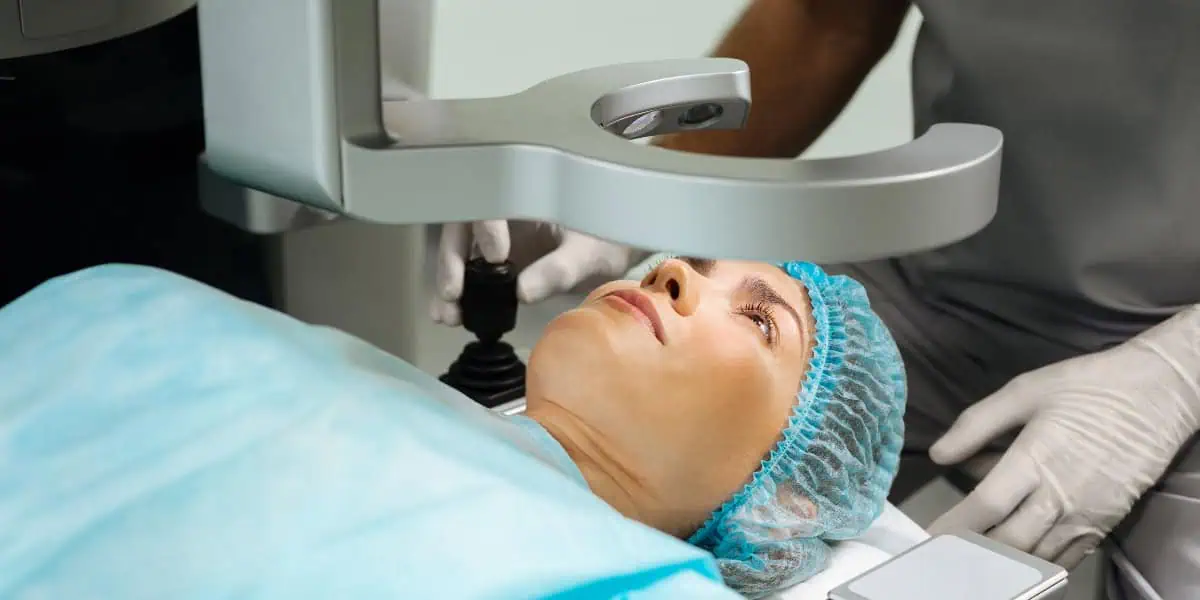
Laser eye surgery is now a proven, safe way to do away with glasses or contact lenses. Technological advances over recent decades have made vision correction procedures quick, painless and personalised. Even so, many people still have questions: What procedures are available? Who is suitable? What are the risks? How much does it cost? Is it worth it over 50? In this guide, we aim to answer these questions.
In this article, we describe in detail the most advanced types of laser eye surgery and vision correction procedures, including Contoura Vision, PRK, Touch Free PRK and ICL lens implantation. We cover the suitability assessment, what the procedures involve, the stages of recovery and prices, including the question of national health insurance funding. A separate section deals with people who are not suitable for surgery for some reason, and with the special considerations for people over 50. The aim of this guide is to provide comprehensive, reliable information to support a well-founded decision, without unnecessary fears and with realistic options.
What is laser eye surgery?
Laser eye surgery is a modern vision correction procedure that aims to precisely correct refractive errors of the eye, such as short-sightedness, long-sightedness or astigmatism. During the procedure, a high-precision laser reshapes the surface of the cornea so that light is focused properly on the retina. The result: sharper vision without glasses or contact lenses. Laser eye surgery therefore improves your existing vision by restoring the eye's refractive balance.
A Laser eye surgery is now backed by mature, reliable technology. The first such procedures were performed more than 30 years ago, and since then millions of people around the world have experienced the benefits. With continuous technological progress, today's procedures are not only faster and more precise but also carry minimal risk. The most advanced devices, such as the excimer laser used in the Contoura Vision procedure, carry out the correction with micron-level precision, based on an individual map of the eye. This allows a particularly precise, personalised result.
The advantages of laser eye surgery include being painless and quick, and in most cases bringing a striking improvement after just a few days' recovery. Many patients report that after the procedure they can play sport, drive or work at a screen freely again without needing glasses. Unlike earlier solutions such as contact lenses or thick-lensed glasses, laser vision correction gives a lasting, long-term result.
Saint James Clinic offers several modern procedures, allowing treatment to be genuinely tailored to individual needs and eye characteristics. These include Contoura Vision, one of the world's most advanced topography-guided vision correction procedures. Also available is Touch Free PRK, which as a completely no-touch method can be ideal for thinner corneas. The classic PRK Surgery procedure is also offered, and for those who are not suitable for other laser treatments for some reason, a solution may be ICL artificial lens implantation.
It is important to emphasise that laser eye surgery is not suitable in every case. Certain medical or anatomical factors may rule out the procedure, but thanks to the modern ophthalmic toolkit, there is a suitable solution for almost every vision problem. A suitability assessment is essential for an accurate diagnosis and a personalised treatment recommendation; it determines which procedure is safest and most effective for each patient.

Am I suitable for laser eye surgery?
The most important requirement for laser eye surgery is medical suitability. Although the procedure is safe and widely applicable, it cannot be performed in every case. The first step is always the suitability assessment, during which the specialist examines several factors: the eye's current refractive error (prescription), the thickness and topography of the cornea, the health of the eye surface, and how stable your vision has been over the past 12 months. This assessment determines whether the patient can safely undergo laser vision correction and, if so, which procedure is most suitable.
The Contoura Vision used at Saint James Clinic, for example, can be used for short-sightedness between –1 and –12 dioptres, long-sightedness between +1 and +4 dioptres, and cylinder (astigmatism) up to ±4 dioptres, provided the structure and thickness of the cornea allow the correction. Treatments are usually performed between the ages of 18 and 65 , as this is the age range in which the eye's refraction is already stable but age-related changes such as cataract have not yet appeared.
Laser eye surgery can be a good choice for people who can only see clearly at a distance with glasses or contact lenses and want to be free of them. It may also be recommended for those who already use two different pairs of glasses, one for distance and one for near vision, as the latest procedures (such as personalised reading glasses treatment) can offer a solution to both problems for suitable patients.
Life without glasses can be an advantage in many situations, for example during sport, where glasses can get in the way, fall off, get damaged or simply cannot be worn, especially in water sports. Contact lenses do not work for everyone in the long term either: they can cause irritation, dry eyes or infection, and are not recommended for certain medical reasons. Laser vision correction can help eliminate these problems, giving a lasting, long-term result.
However, not everyone is suitable for the procedure. Exclusion factors include:
- untreated autoimmune disease,
- poor wound healing,
- severe dry eye,
- keratoconus (abnormal thinning of the cornea),
- active eye inflammation or infection,
- pregnancy or breastfeeding,
- and cataract, which requires a different kind of procedure.
Particular attention should be paid to a thin cornea . In this case, vision correction with an excimer laser is not always safe, but alternative methods can be used, such as the Touch Free PRK procedure or, if laser surgery is not an option, ICL lens implantation. In the latter, a special artificial lens, similar to an internal contact lens, is implanted, with no need to reshape the cornea.
A special case is being over 50 , as presbyopia (age-related long-sightedness) often appears at this age and needs particular attention. In such cases, personalised solutions, such as treatments or lens surgery that correct both near and distance vision, can give a good result. This is covered in a separate section later in the article.
Most importantly, laser eye surgery is not a one-size-fits-all solution but the result of a decision based on individual characteristics and needs. Thorough examinations at the clinic help establish who is suitable for which type of vision correction. If a patient does not meet the criteria for laser eye surgery, Saint James Clinic also offers other modern, safe procedures; the aim is always to provide the best long-term vision.
Types of laser eye surgery, prices and benefits
Below we describe each laser eye surgery procedure in detail. The aim is to make clear what each treatment involves, who it is recommended for and what its pros and cons are, so that your decision can be better informed.
Contoura Vision
A Contoura Vision is a premium laser eye surgery procedurethat maps irregularities on the surface of the cornea, at up to a hundred thousand points, and then corrects them with a laser. The aim is to correct refractive errors so precisely that the quality of vision improves significantly. Before the procedure, the cornea is mapped with modern topography and wavefront measurements, so the excimer laser works from an individual pattern.
Advantages
- A premium treatment that typically achieves a high degree of sharp vision.
- Faster recovery: according to clinical data, many people see better as soon as the day after surgery.
- According to some statistics, 150% visual acuity can be achieved in suitable cases.
Before treatment
Contoura Vision treatment is preceded by a thorough suitability assessment, which involves several steps: topographic mapping (a detailed examination of the corneal surface), measuring the prescription and cylinder, measuring corneal thickness, and assessing the overall condition of the eyes. The aim is to establish whether the patient meets the treatment criteria (e.g. short-sightedness between –1 and –12 dioptres, long-sightedness between +1 and +4 dioptres, or astigmatism of around ±4 dioptres) and whether there is any reason to rule it out.
The procedure
If the assessment is positive, on the day of surgery the procedure itself can be carried out quickly. The patient is given anaesthetic eye drops, so pain can be avoided in most cases. The procedure usually takes just a few minutes, even for both eyes, and many patients can return to their everyday activities the next day.
Recovery
After the procedure comes recovery and a series of check-ups: a striking improvement is usually seen after 1–2 days, followed by a gradual return to everyday life and check-ups at the prescribed times. According to the clinic's website, for example, check-ups are needed the day after surgery and after 1 week, 2 months and 6 months.
Who is this treatment recommended for?
For patients whose refractive error, whether short-sightedness, long-sightedness or astigmatism, can be corrected with glasses or contact lenses and in whom the suitability assessment finds no exclusion factor. Reasons for exclusion include an irregularly shaped cornea, severe dry eye, impaired healing, or a prescription that has not stabilised over the past year. The treatment improves quality of life: the clinic emphasises that it is a modern, safe procedure offering the possibility of seeing without glasses or contact lenses.
Price
According to the price list, Contoura Vision laser eye surgery costs HUF 339,000 / eye.
Touch Free PRK
A Touch Free PRK laser vision correction is an advanced, no-touch version of the classic PRK procedure, particularly beneficial for people for whom flap-based laser surgery is not recommended because of a thin cornea or other anatomical features.
Advantages
- The surface epithelium is also removed by laser, completely without touch; no mechanical instrument is used to remove the epithelium.
- It is a more comfortable, gentler experience, and healing may be somewhat faster.
- Modern technology and less physical intervention, which can improve quality of life for people who were previously not suitable for other laser methods.
Before treatment
The suitability assessment includes corneal topography mapping, measuring the prescription and cylinder, checking corneal thickness, and examining the tear film and the back of the eye. Its aim is to establish whether the patient meets the treatment criteria, for example with regard to distance or near refractive error, and whether there are any exclusion factors.
The procedure
Once suitability is confirmed, on the day of surgery the patient is given local anaesthetic eye drops. For both eyes, the procedure takes about 8–10 minutes in total . Because it is no-touch, the eye surface is minimally affected, so healing may be faster.
Recovery
After this procedure, vision improves gradually, typically over several weeks. Check-ups are regular: for example after 72 hours and 1, 3 and 6 months after the procedure. The clinic also offers a 10-year retreatment guarantee for this procedure.
Who it is recommended for / exclusions
Recommended for patients who wear glasses or contact lenses for distance, would like a life free of them, and whose eyes allow the procedure (e.g. the cornea is not too thin and there is no serious eye surface problem). Exclusions include autoimmune disease, certain wound healing problems, severe dry eye, an irregular cornea, cataract, or pregnancy and breastfeeding. This procedure is therefore a modern, gentle and reliable option for people who are not suitable for flap-based technology but would still like laser vision correction.
Price
At Saint James Clinic, Touch Free PRK laser eye surgery currently costs HUF 229,000 / eye.
Klasszikus PRK
A Classic PRK (photorefractive keratectomy) is a laser vision correction procedure proven over several decades, particularly suitable when the cornea is thinner or other procedures are not recommended. The surface epithelium of the cornea is removed and the excimer laser then reshapes the cornea to correct the refractive error. This method is typically recommended when a flap-based or other more time-consuming procedure is not ideal for the patient for some reason.
Advantages / disadvantages
- Its great advantage is that it is an extremely reliable procedure that has been used for a long time, so there is a great deal of experience behind it.
- The disadvantage is that recovery can often take longer and vision may improve more slowly at first than with flap-based or premium laser procedures, so more patience may be needed in the first few weeks.
Before treatment
The suitability assessment examines the refractive error (prescription, cylinder), the surface and thickness of the cornea, and the general condition of the eyes (e.g. the back of the eye, tear film, corneal topography). It also checks whether the prescription is stable (has not changed significantly in the past year) and whether there are any exclusion factors (such as severe dry eye, inflammation or autoimmune disease).
The procedure
On the day of surgery, local anaesthetic (eye drops) is used, the surface epithelium is removed (in classic PRK this can be done mechanically or by laser), and the excimer laser then reshapes the cornea to correct the refractive error. The procedure is usually short even for both eyes (about 10–15 minutes for both together), and the patient then recovers at home the same day or the next.
Recovery
During recovery, the eyes may be sensitive for the first 1–2 days, with a temporary feeling that something is in the eye, watering or sensitivity to light. Vision does not improve immediately: there is typically a significant improvement within a few days, but reaching full, stable visual acuity may take several weeks. Check-ups are needed to monitor the success of the procedure and follow the safety protocol.
Who it is recommended for / exclusions
Recommended for patients whose refractive error (short-sightedness, long-sightedness or astigmatism) can be corrected with a laser and whose cornea allows the procedure (e.g. it is not too thin and has no irregular curvature). Exclusions include a highly irregular cornea (e.g. keratoconus), severe dry eye, active eye inflammation or infection, autoimmune disease, an unstable prescription over the past year, or circumstances that could make recovery riskier (such as pregnancy or breastfeeding).
This procedure therefore offers an alternative when the patient is not suitable for a flap-based or premium laser procedure: a reliable option that requires more patience.
Price
According to offers from Hungarian clinics, classic PRK laser eye surgery costs approx. HUF 189,000 / eye.
ICL artificial lens implantation
Although it is not laser eye surgery in the traditional sense, ICL lens implantation is an important alternative vision correction procedurethat the clinic also offers. A special artificial lens is implanted in the eye to correct the prescription without significantly reshaping the cornea. It can be used when laser eye surgery is not recommended, for example because of a high prescription, a thin cornea or other exclusion factors.
Advantages
- The procedure does not require changing the structure of the cornea, so it may also be available to people with a thin cornea or for whom other laser technologies are not recommended.
- After the lens is implanted, vision can improve significantly and the need for contact lenses or glasses may disappear.
- The implanted lens can be removed or replaced if necessary, so the procedure does not permanently "rule out" future alternatives.
Before treatment
The suitability assessment includes detailed eye examinations: assessing the refractive error (prescription, cylinder), examining the cornea, and checking the back of the eye and other parameters. It is important that the prescription is already stable and that there is no serious eye disease that could rule out the procedure.
The procedure
The procedure is done as an outpatient: after local anaesthetic (eye drops), the artificial lens (ICL) is placed inside the eye, between the iris and the natural lens. The procedure takes about 10–15 minutes, and recovery can begin the same day or the next.
Recovery
Vision can improve relatively quickly; in many cases visual acuity improves shortly after surgery. However, check-ups must be attended. The eye needs time to stabilise. An advantage of the ICL lens is that it does not alter the cornea to an extent that would require a longer recovery.
Who it is recommended for / exclusions
Recommended for patients whose refractive error (e.g. short-sightedness, astigmatism) is so high, or whose anatomy (thin cornea, lack of stability) is such, that conventional laser eye surgery is not recommended. Exclusions include an unstable prescription, active eye infection or inflammation, pregnancy or breastfeeding, and anatomical variations that do not allow safe implantation.
Price
According to Saint James Clinic's price list, the list price for ICL lens implantation is HUF 590,000 / eye.
Femto7D two-laser procedure
The Femto7D two-laser vision correction treatment is equivalent to Saint James Clinic's Contoura Vision treatment. Two-laser treatments play a significant role in the range of laser eye surgery, and many people come across them when searching. The Femto7D treatment is a combined, two-laser, premium vision correction procedure. In the first step, a femtosecond laser creates a protective flap on the surface of the cornea. A second laser, usually an excimer laser or a 7D laser , then reshapes the inner layers of the cornea to make the necessary correction. The two-step system allows a high-precision procedure, while the flap preserves the integrity of the eye surface.
Advantages
- Most clinics describe both the treatment and the healing process as painless.
- Fast recovery: many patients can return to work and driving after just 1 day.
- The stable flap increases mechanical safety after surgery, especially for athletes or people with a physically active lifestyle.
- It can be used for up to –10 dioptres, so it can also be a solution for people with higher prescriptions.
Steps of the treatment
- Suitability assessment: topography, prescription, corneal thickness, overall eye health.
- Surgery: a two-laser process (femtosecond laser + corrective laser), usually a few minutes per eye.
- Recovery: improved vision is noticeable from the first day, but wearing sunglasses and avoiding rubbing your eyes is recommended for a few days.
Who it is recommended for / exclusions
- Recommended for: people with higher prescriptions who want fast recovery and high mechanical stability.
- Possible exclusions: irregular cornea, severe dry eye, unstable prescription, active eye inflammation.
- Disadvantage: higher cost because of the two separate laser technologies.
Price (for guidance)
between HUF 450,000 and 490,000 / eye, depending on the lasers used and the level of the clinic.
Visumax Robotic two-laser procedure
Thanks to its cutting-edge status and the interest it attracts among patients, Visumax Robotic laser vision correction is currently one of the most popular vision correction procedures.
Visumax Robotic is a robot-assisted two-laser eye surgery that can be seen as an advanced version of Femto7D. During surgery, a robotic arm, a 3D camera and ultrasound sensors assist the procedure, while the doctor controls the process. The corrective laser (e.g. Schwind 7D or another precision platform) works beneath the flap, leaving the surface layers untouched.
The Visumax Robotic two-laser vision correction procedure is equivalent to the Contoura Vision treatment offered by Saint James Clinic. You can find more information about the treatment on our website.
Advantages
- Extremely high precision: the robots position the treatment head with micron accuracy.
- The procedure is quick: e.g. for –3 dioptres it can be completed in as little as 12 seconds per eye.
- Minimal surgical stressand less room for error.
- Fast return to workand driving, even the next day.
How it works and the steps
- The robot prepares the flap, then the corrective laser corrects the refractive errors.
- Throughout the procedure, the system monitors the position of the eye and adjusts the lasers automatically.
Who it is recommended for / exclusions
- Recommended for: patients aged 18–40 with a prescription between –12 and +5.5.
- Possible exclusions: thin cornea, unstable prescription, inflammatory eye conditions.
- The doctor is present throughout and the robot assists, so the procedure is not carried out by a "machine working on its own".
Price (for guidance)
HUF 470,000–520,000 / eye, depending on the level of robotisation and the technology used.
Who is not suitable for laser eye surgery?
Although modern laser vision correction can now be used very widely, there are cases where someone is not suitable for laser eye surgery. This does not mean the patient misses out on vision correction, only that a different, personalised and safe alternative may be needed.
One common exclusion factor is a thin cornea. Because laser procedures reshape the upper or inner layers of the cornea, the procedure is not safe below a certain thickness. Another reason for exclusion may be an irregular cornea, for example in keratoconus , when the eye surface is uneven and laser treatment would give an unstable result.
Another possible exclusion is severe dry eye : laser treatment can increase dryness, which can cause unpleasant symptoms and slow healing. In addition, general health conditionssuch as untreated autoimmune diseases, vagy a wound healing disorders can also affect the safety of surgery. Clinics generally do not recommend laser eye surgery during pregnancy or breastfeeding either, as hormonal changes can temporarily alter vision and the condition of the cornea.
Age deserves special attention: laser eye surgery over 50 is possible, but by then presbyopia (the need for reading glasses) is common, and other age-related eye changes may also occur. For the over-50s, the clinic therefore typically recommends a special suitability assessment and, where appropriate, suggests another procedure instead, such as vision-correcting lens replacement, which can be a lasting solution regardless of age, even for higher prescriptions.
It is important to stress that the purpose of the suitability assessment is not to exclude people but to choose the most suitable procedure. If someone is not suitable for laser eye surgery, that does not rule out vision correction; a different route simply leads to a safe, stable result. This approach reinforces the message that patients are not left on their own: the decision on the right treatment is always made on an individual basis with professional support.

Laser eye surgery prices and financing: is it worth investing in your sight?
The price of laser eye surgery may seem a significant sum at first, but in many cases this one-off investment pays for itself within a few years, especially for people who regularly spend money on glasses, contact lenses, prescription sunglasses or their upkeep. Saint James Clinic offers several laser procedures at different price levels, so everyone can find the right option.
How much does laser eye surgery cost?
The price depends on the technology used and individual circumstances. Prices are available on Saint James Clinic's official website.
What does the price include?
The stated fees cover a complete treatment package , which includes:
- Suitability assessment: topography, prescription, corneal thickness, overall eye health.
- The operation: using the chosen procedure, quickly even for both eyes.
- Check-ups: several times after the procedure, according to the clinic's protocol (e.g. 1 day, 1 week, 2 months, 6 months).
Financing and discounts
Saint James Clinic offers several financing options:
- Instalments: by prior arrangement, the procedure can be paid for in instalments spread over several months.
- Health fund payment: most Hungarian health funds are accepted, and treatments can be claimed on the basis of an invoice.
- Discounts: seasonal offers, student discounts, valamint travel cost reimbursement for patients from outside Budapest may also be available; ask the clinic directly about the exact terms.
National health insurance: is laser eye surgery covered?
A frequent question: "Is laser eye surgery available on national health insurance?" The short answer: at present, most vision correction procedures are not among the operations funded by national health insurance. Because of their high-tech, personalised nature, these procedures are performed privately. However, the clinic is continually working to offer discounted packages for certain services.
So is laser eye surgery worth it?
Laser eye surgery is not just a cosmetic matter; it can also be a step up in quality of life: sharp vision as soon as you wake up, and playing sport, travelling or working without contact lenses all add to your comfort. The cost of treatment is therefore not just the fee for a medical procedure but a long-term investment in your sight, which for many people replaces years of spending on glasses or contact lenses.

Laser eye surgery over 50: what are the options?
Laser eye surgery over 50 is no longer the exception, but it is important to know that the physiology of the eye changes in several ways at this age. Suitability then depends not only on refractive errors but also on what other age-related factors have already affected the eyes.
What changes after 50?
- Presbyopia (age-related long-sightedness): this natural process involves the lens losing its elasticity. It usually starts at around 40–45, and after 50 everyone needs reading glasses.
- Cataract: after 50, the likelihood of the lens starting to cloud increases. If this process has started, instead of certain laser procedures, lens surgery may be needed.
- Dry eye and healing ability: these can also change with age, which can affect healing time and comfort after surgery.
Can laser eye surgery be done over 50?
Yes, if the eyes are in suitable condition, laser eye surgery can certainly be done over 50. The key is the suitability assessment, which is particularly thorough at this age: it examines not only the prescription but also the clarity of the lens, the condition of the retina and the degree of dry eye.
Saint James Clinic pays particular attention to the 45+ age group. This is reflected in its targeted "Sharp Vision 45+" programme, which is based on Contoura Vision treatment but designed with the needs of presbyopia in mind. This means that regaining sharp near or distance vision may be possible, in some cases with combined treatment.
When can vision-correcting lens surgery be an alternative?
If the lens is no longer clear (early cataract), or if, because of presbyopia, you need both reading and distance glasses, doctors often recommend lens replacement. These procedures are long-term and can even be a lifelong solution.
What should you do if you are over 50?
The first step is a personalised suitability assessment ; at the clinic, this receives special focus for patients over 45. The assessment shows which procedure is most suitable: Contoura Vision, an ICL lens or another alternative. The aim is for the patient to achieve the best possible quality of vision without compromise, whether that means sharp distance vision or freedom from reading glasses.

Risks, side effects and recovery: what you need to know
Every medical procedure, even the most advanced laser vision correction, can have side effects or rare complications. Saint James Clinic aims to make patients feel safe at every step, so it works to a strict protocol, exclusively with experienced doctors specialising in refractive surgery. However, it is important that patients make an informed decision, so below we describe the possible risks, side effects and the course of recovery in detail.
Common side effects: what to expect after surgery
After the procedure, especially in the first few days, the following temporary symptoms are completely normal:
- Dry eyes: common mainly in the weeks after laser treatment; easily managed with eye drops.
- Sensitivity to light: wearing sunglasses is recommended, especially in sunny weather.
- Short-lived blurred vision, fluctuating sharpness: common in the first stage of recovery, especially with Touch Free PRK and PRK.
- A feeling that something is in the eye, mild stinging: may occur mainly after Touch Free PRK and PRK procedures and eases within a few days.
According to the clinic, these symptoms are mild and temporary in most patients and are a natural part of healing. With Contoura Vision, for example, many people report sharper vision the day after surgery.
Less common complications: honestly and responsibly
As with any medical procedure, rarer complications can occur:
- Persistent dry eye or excessive watering.
- Inflammation or problems with the epithelium healing.
- Under- or overcorrection, needing retreatment.
It is important to note that our clinic offers a 10-year retreatment guarantee for several procedures and closely monitors patients' progress. A precise suitability assessment beforehand and a personalised choice of procedure significantly reduce the risk of complications.
Recovery: when can life return to normal?
The length of recovery depends on the treatment chosen:
- Contoura Vision: many patients can return to their everyday activities within 24 hours. Check-ups: 1 day, 1 week, 2 months, 6 months.
- Touch Free PRK: expect a slightly longer recovery; sharp vision may take several weeks to develop. Check-ups: 72 hours, 1 month, 3 months, 6 months.
Returning to sport, driving and screen work also happens gradually, as advised by your doctor.
Tips for a smooth recovery
- Avoid make-up: in the first few days after the procedure, especially around the eyes.
- Stop wearing contact lenses: patients are also asked not to wear contact lenses before the assessment (at least 3–5 days for soft lenses, up to 2 weeks for hard lenses).
- Wear UV-filtering sunglasses: essential during recovery, and recommended even indoors in bright light.
- Avoid rubbing your eyes: especially important after flap-based procedures, for the stability of the flap.
A clinic's aim is for recovery to be quick, comfortable and safe. Patients receive detailed information about what to do at every step, and the condition of the eyes is monitored at each check-up so that any problem can be detected and treated in time.
How do I choose a clinic and a procedure?
Laser eye surgery has a long-term effect on the quality of your vision, so price is not the only thing that matters when deciding. It is important that the clinic you choose offers a reliable background, modern technology and transparent, professionally sound care.
What should you consider when choosing a clinic?
- Technology: Which laser systems do they use? Are top-of-the-range procedures such as Contoura Vision available?
- Orvosi tapasztalat: Does the surgeon specialise in refractive surgery? Is their professional background known, and are they featured in the presentation of the medical team?
- Check-up system: How often and in how much detail is recovery monitored?
- Garancia: Is a retreatment guarantee available? (Saint James Eye Centre, for example, provides a 10-year retreatment guarantee for several procedures.)
- Transparent pricing: Is the price list publicly available? Is it clear what the price includes (assessment, surgery, check-ups)?
- Discounts and support: Are there discounts, for example for students or for people travelling from outside Budapest?
How should I choose a procedure?
It is best not to make this decision alone: the condition of the eye, the thickness of the cornea, the strength of the prescription, age and the need for reading glasses all affect which treatment is recommended. That is why the personalised suitability assessment is so important: the specialist not only examines your eyes but also helps you choose the safest and most effective procedure.
The available options may include:
- laser vision correction treatments (Contoura Vision, Touch Free PRK, PRK),
- and, as an alternative, ICL artificial lens implantation if the patient is not suitable for a laser procedure.
Patient experience and support
A good clinic does not just perform the operation; it supports the patient throughout the whole process. At Saint James Clinic, from the very first consultation you receive detailed information about what to do, the day of surgery, the recovery period and every check-up. An experienced team of assistants answers patients' questions, and personalised support is also available after surgery.
Frequently asked questions about laser eye surgery
Does laser eye surgery hurt?
Modern procedures are carried out with anaesthetic eye drops, so the procedure itself is painless. With some treatments (e.g. PRK), there may be a mild stinging sensation or a feeling that something is in the eye for 1–2 days after surgery, but this is easily managed with eye drops and rest.
How long does the operation take?
Laser eye surgery usually takes just a few minutes , and in most cases both eyes are treated at the same time. The total time at the clinic, including tests and rest, is about 2–3 hours.
How soon can I go back to work?
This depends on the procedure. With Contoura Vision, many people are back at work the next day. After PRK and Touch Free PRK, a longer rest is recommended; plan for 5-7 nap time off work.
When can I play sport again?
Light exercise (e.g. walking) is possible after a few days. Intensive sport, water sports or contact sports, however, are recommended only after 2–4 weeks , as instructed by your doctor.
Will my vision get worse again?
If your prescription is stable at the time of the suitability assessment, the surgery gives a lasting result. Age-related changes (e.g. presbyopia) may naturally appear later; this is not the surgery "wearing off" but part of the ageing process.
Will I still need glasses after surgery?
The aim is that you will need neither distance nor reading glasses after surgery. However, in some cases, such as reading glasses in later life, a visual aid may still come in handy for certain activities. This is another reason why a personalised choice of procedure is important.
Is state funding available?
A „laser eye surgery on national health insurance" comes up often, but it is important to know that laser vision correction is generally not funded by national health insurance in Hungary. However, health fund payment, instalments or discounted packages are available at many clinics, so the procedure can be planned financially.
What happens if it turns out I'm not suitable?
There is no need to be disappointed: in this case, the doctor will suggest an alternative, such as ICL lens implantation. The goal is always the same: safe, personalised vision correction, whether by laser or another modern method.
Why can't I wear contact lenses before the assessment?
Contact lenses, especially hard ones, can temporarily change the shape of the cornea, which can distort the measurements. That is why patients are asked not to wear soft lenses for at least 3–5 napig, or hard lenses for up to 2 weeks before the assessment.
Can I have laser eye surgery if I have had other eye surgery before?
It depends on what procedure you had and the current condition of your eyes. During the suitability assessment , this is also evaluated in detail. Some previous operations (e.g. cataract surgery) may rule out certain laser procedures.
Can my prescription increase again after laser eye surgery?
Rarely, a slight change in prescriptionmay occur, especially if vision was not yet completely stable at the time of surgery. That is why a stable prescription before surgery is important: typically, no change within the past year is required.
Summary: clear vision, a confident decision
A Laser eye surgery is no longer the privilege of the young, but a modern, safe procedure that improves quality of life and is available to all age groups. Whether it is everyday life without glasses or contact lenses, sharper vision when driving or playing sport, or simply comfort, laser vision correction can make a real difference.
However, every eye is different, so the chosen treatment is always based on a personalised suitability assessment . This step ensures that the most suitable procedure for each patient is chosen, whether Contoura Vision, Touch Free PRK, PRK or ICL lens implantation.
With the latest technology, an experienced medical team and transparent, safe processes, Saint James Clinic helps its patients make confident decisions about vision correction.
Book a suitability assessment and take the first step towards sharp vision without glasses.
The clinic is by your side at every step, from your first questions to your post-operative check-ups, so that your decision is not only safe but also reassuring. Because sharp vision is not a luxury but an achievable reality.