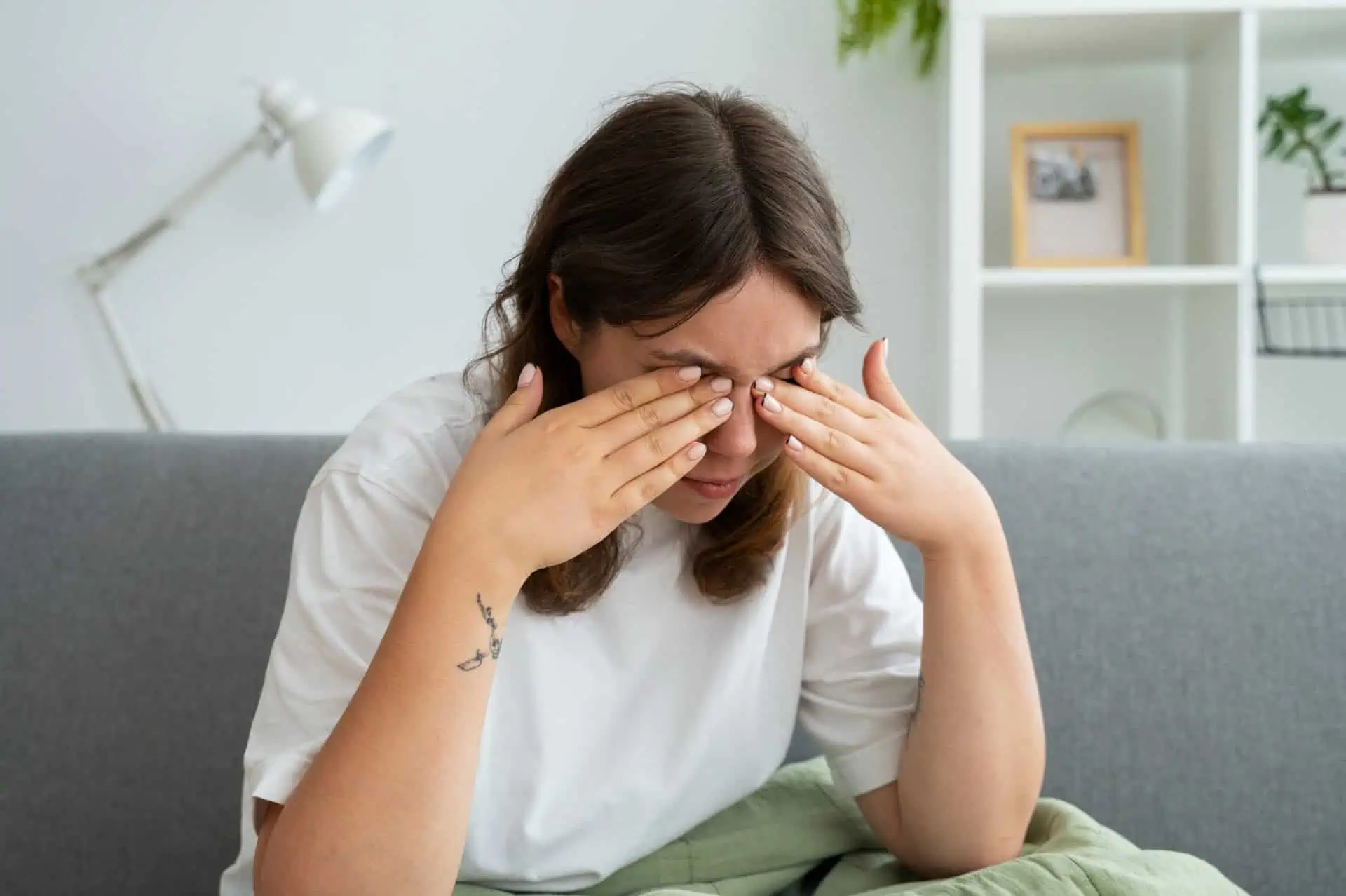
Eye pain is a common complaint that can take many forms. It may be a mild burning, stabbing or scratchy feeling, but it can also be a strong, throbbing pain in or behind the eyeball. It is often caused by irritation, dry eyes or eye strain. In some cases, however, the cause is an infection, inflammation, injury, raised eye pressure or a disease of the optic nerve. That is why it is important to notice not only how much your eye hurts, but also how the pain started, where you feel it, and whether it comes with blurred vision, redness, sensitivity to light or other symptoms.
In this article, we look at the most common causes of eye pain, what different types of pain may mean, and the warning signs that need prompt medical attention. We also explain what an eye examination involves, the treatment options, and simple steps that can help with milder symptoms.
Eye pain is not the same for everyone
Eye pain is not one single, clearly defined sensation. The discomfort can come from the surface of the eye, the eyelid, the inside of the eyeball or the area behind the eye. The pain may also actually come from the forehead, the sinuses or another part of the head and radiate to the area around the eye.
Surface-related discomfort usually causes a burning, stinging, scratchy or dry feeling. In these cases, the tear film, the conjunctiva or the cornea is often affected. Deeper pain tends to be dull, pressing, throbbing or boring. This pain may be felt in the eyeball or behind the eye, or may radiate towards the forehead, temple or face.
For diagnosis, it matters a great deal whether one or both eyes hurt. It is also important whether the symptom came on suddenly or gradually, whether it is constant, and whether it gets worse when you blink, read, are in bright light or move your eyes. The nature of the pain can point to a possible cause, but a definite diagnosis can only be made after an eye examination.
Eye strain is a common cause of discomfort
Long periods of reading, working at a screen, frequent phone use or poor lighting can easily overload your eyes. Ilyenkor
- dull pain,
- a feeling of tension,
- heavy eyelids,
- blurred vision,
- or headaches may occur.
The symptoms typically get worse towards the end of the day and ease after rest.
When using a screen, we usually blink less often. As a result, the tear film breaks up more quickly and the surface of the eye can dry out. Symptoms can be made worse by dry air, air conditioning, light that is too bright or too dim, screen glare and the wrong glasses.
Eye strain is usually not dangerous, but if the symptoms persist it is worth having an eye test. There may be an undiagnosed refractive error, such as short-sightedness, long-sightedness or astigmatism. From your forties, presbyopia (age-related long-sightedness) can also make work harder, leading to increased effort and headaches.
To reduce the strain, it can help to take
- regular breaks,
- blink consciously
- and keep a suitable distance from the screen.
It is best to position the screen slightly below eye level. If the pain does not go away after rest, or comes with visual disturbance, double vision or marked redness, a medical consultation is recommended.
Dry eyes can cause a burning and stinging sensation
Dry eye develops when not enough tears are produced, or when the composition of the tear film is not right. Tears not only keep the eye moist but also protect and nourish its surface. If the tear film evaporates too quickly or does not spread properly, irritation can occur.
Typical symptoms of dry eye are a burning, stinging, prickling or scratchy feeling. Also common are
- a feeling that something is in your eye,
- redness,
- vision that becomes blurred from time to time,
- and increased watering of the eyes.
Although it may seem contradictory, an irritated eye can reflexively produce a lot of tears. However, these tears often do not stay on the surface of the eye for long enough.
Symptoms can be made worse by long periods of screen use, wearing contact lenses, windy or dry surroundings, tobacco smoke, air conditioning, age and certain medications. Some conditions, such as diabetes, thyroid disorders and certain autoimmune diseases, can also make the symptoms more likely.
Enyhe esetben
- Preservative-free artificial tears,
- humidifying the air
- and taking breaks from the screen can all help.
If the symptoms persist, are painful or affect your vision, an eye examination is needed. Without treatment, severe dry eye can even damage the surface of the cornea.
Irritation and allergy as possible causes
Dust, smoke, strong wind, cosmetics, chlorinated water or fumes from cleaning products can cause temporary irritation. The eye may burn, water and turn red. The symptoms usually ease quickly once the irritant is removed.
With an allergy, itching is usually the strongest symptom. Both eyes are often affected, along with a runny nose, sneezing or a blocked nose. The eyelids may swell and the eyes may water. Allergic symptoms can get worse seasonally, for example during pollen season, but can also be triggered by pet hair, dust mites or cosmetics.
Severe pain, marked sensitivity to light and loss of vision are not typical of a simple allergy. In these cases, an eye examination is needed. For mild allergic symptoms, a cold compress and avoiding the allergen can help. However, medicated eye drops should be chosen after consulting a doctor or pharmacist .
A foreign body or minor injury can also cause severe pain
An eyelash, a speck of dust, a grain of sand or a tiny insect can cause a sudden, stabbing sensation. The eye starts to water, may turn red, and the pain may get worse when you blink. Avoid rubbing your eye, as the foreign body can scratch the cornea.
For surface particles, gently rinsing with clean, lukewarm water or sterile saline can help. If the foreign body does not come out, the pain persists or your vision gets worse, you need a medical examination. Prompt care is especially important if a fragment of metal, glass or wood may have got into the eye.
An object embedded in the eye must not be removed at home. Do not put any pressure on the eye either. If a chemical gets into the eye, start rinsing immediately with plenty of water, then seek emergency care. Do not delay rinsing in order to identify the substance first.
Corneal injury
The cornea is the clear front part of the eye. It contains a very large number of sok sensory nerves, so even a tiny scratch to its surface can cause severe pain. The surface of the cornea can be injured by a fingernail, a branch, a contact lens or a small foreign body in the eye, for example.
The pain usually
- starts suddenly,
- is stabbing in nature,
- and comes with watering,
- sensitivity to light,
- redness,
- or a feeling that something is in the eye.
The symptoms may persist even after the original foreign body has left the eye. The size and location of the injury can be assessed precisely during an eye examination using a special dye.
With proper treatment, minor injuries often heal quickly. However, preventing infection and relieving pain may require medical treatment. Using anaesthetic drops or leftover eye drops at home is not recommended, as they can mask a worsening condition and some products can slow healing.
When contact lenses cause irritation
Incorrect use of contact lenses can cause irritation, dry eyes, corneal injury and infection. The risk is higher if the lens
- is worn for longer than recommended,
- is left in during sleep,
- comes into contact with tap water,
- or the case is not cleaned properly.
If you have a painful, red eye, blurred vision or sensitivity to light, remove the contact lens immediately. Do not put the lens back in until the cause of the symptoms has been identified. These symptoms need an urgent eye examination, as they may be caused by a corneal infection.
Keratitis, or inflammation of the cornea, can get worse quickly. Without treatment, ulcers, scarring and permanent loss of vision can develop. Treatment depends on the cause. A bacterial infection may need antibiotics, while a viral infection may need antiviral medication. Early diagnosis makes a big difference in preserving your sight.
What can a painful eyelid mean?
Inflammation of the eyelid margins (blepharitis) is a common, often recurring condition. It can cause a burning, itching or stinging sensation, discharge in the morning, watering and red eyelid margins. It may be caused by a problem with the eyelid glands, a skin condition or an overgrowth of microorganisms.
In milder cases, regular eyelid cleaning and warm compresses can improve the condition. However, persistent or frequently recurring symptoms should be checked, as targeted treatment may be needed. Blepharitis can also come with dry eye, and the two problems can make each other worse.
The stye is an acute inflammation of one of the eyelid glands. It usually appears as a painful red lump near the lashes or on the inside of the eyelid. Do not squeeze it, as the infection can spread. If the swelling grows quickly, you develop a fever, or moving your eye becomes painful, see a doctor promptly.
A chalazion , by contrast, is usually less painful and feels more like a persistent lump. If it does not go away over time, grows or affects your vision, treatment by an ophthalmologist may be needed.
Types of conjunctivitis
Conjunctivitis is an inflammation of the membrane covering the white of the eye and the inner surface of the eyelid. It can be caused by
- a virus,
- bacteria,
- allergia,
- or an irritant.
Typical symptoms are redness, watering, a burning or scratchy feeling and discharge.
With viral conjunctivitis, watery discharge is common and the symptoms often come with a cold. With a bacterial infection, thicker, yellowish discharge may appear, which can stick the eyelids together by morning. With allergic conjunctivitis, itching is usually the strongest symptom and both eyes are usually affected.
The different types are treated differently. Antibiotics may only be justified for a bacterial infection; they do not help with viral or allergic conjunctivitis. That is why it is not a good idea to start treating yourself with leftover eye drops.
Pain, strong sensitivity to light, loss of vision and a very red eye are not typical of simple conjunctivitis. In these cases, keratitis, uveitis or another more serious problem may be involved, so an eye examination is needed.
Symptoms and risks of inflammation inside the eye
The uveitis is an inflammation of the inner parts of the eye. It often starts suddenly and can cause
- deep eye pain,
- redness,
- sensitivity to light,
- blurred vision,
- or floaters.
It can affect one or both eyes.
It may be caused by an infection, an autoimmune disease or another inflammatory condition, but often no clear cause is found. Without treatment, complications such as glaucoma, cataract or permanent loss of vision can develop. That is why a red eye with pain and sensitivity to light needs to be examined promptly.
Treatment often involves anti-inflammatory eye drops and sometimes drops to dilate the pupil. In more severe cases, oral medication or injections may be needed. If an infection is the cause, it must also be treated separately. Steroid eye drops should only be used on the advice of an ophthalmologist.
A scleritis is an inflammation of the tough white outer coat of the eyeball. It usually causes deep, boring or throbbing pain that may persist at night and radiate to the forehead or face. It is often associated with an autoimmune disease, so other specialist investigations may be needed in addition to an eye examination.
A sudden rise in eye pressure
Most forms of glaucoma damage the optic nerve slowly and, at first, without pain. Acute angle-closure glaucoma, however, comes on suddenly with severe symptoms. In this case, the fluid inside the eye cannot drain properly, so the eye pressure rises quickly.
Typical symptoms may include
- severe pain in the eye or forehead,
- a red eye,
- misty vision,
- and coloured rings around lights.
It may also come with headache, nausea and vomiting. The symptoms can be so severe that the condition is initially mistaken for a migraine or a stomach problem.
An acute rise in eye pressure requires immediate treatment. Without treatment, it can cause permanent damage to the optic nerve within a short time. Eye pressure is lowered with medication and eye drops, and laser treatment is often needed afterwards. If you have severe eye pain together with redness, blurred vision and nausea, do not wait for the symptoms to go away on their own.
What can cause pain behind the eye?
Pain felt behind the eye is often linked to headaches, migraine or sinus problems.
- Migraine usually causes a one-sided, throbbing headache, sensitivity to light and sound, nausea and sometimes visual symptoms. A visual aura can involve flickering lights, zigzag lines or temporary loss of part of the visual field.
- The sinusitis tends to cause a feeling of pressure around the eyes, in the forehead or in the face. A blocked or runny nose is common, and the pain may get worse when you bend forward. However, pain around the eyes alone does not prove that the sinuses are the source.
- A inflammation of the optic nerve can also cause pain behind the eye. In this case, the pain often gets worse when you move your eyes, and vision in one eye may deteriorate. Colours may look duller, or part of the visual field may be lost. This condition requires an eye examination and often a neurological assessment.
After an injury, your vision must also be checked
After a blunt blow, the eyelid may swell and bruise. However, external signs do not reliably show whether the eyeball, eye socket or retina has been damaged. That is why it is important to watch for
- any change in vision,
- double vision,
- flashes of light,
- floaters,
- and loss of part of the visual field.
An urgent examination is neededif, after an injury,
- your vision gets worse,
- the pupil becomes irregular,
- blood is visible in the eye,
- the eye cannot move properly,
- or you have severe pain.
With a high-speed object, such as a metal splinter, there may be a deeper injury even if hardly anything is visible from the outside.
In this case, do not put pressure on the eye or try to remove an embedded object. Prompt specialist care is needed to avoid further damage.
What can the type of pain tell you?
A burning, scratchy or gritty feeling most often points to dry eye, mild irritation or blepharitis. If itching is the strongest symptom, an allergy is often the cause. Discharge can be typical of conjunctivitis, but the colour of the discharge alone is not enough for an accurate diagnosis.
A sudden, sharp pain may indicate a foreign body or a corneal injury. Severe pain with watering and sensitivity to light can also occur with keratitis. A deep, throbbing or boring sensation may be linked to inflammation inside the eye or raised eye pressure.
Pain that gets worse when you move your eyes may be caused by optic neuritis, an infection of the eye socket or involvement of the eye muscles. So the type of pain is an important clue, but the symptoms often overlap. That is why, rather than drawing your own conclusions, an examination is recommended for persistent or severe symptoms.
When you need immediate medical care
You need immediate eye care or emergency treatment if eye pain starts suddenly, is very severe or gets worse quickly. Other warning signs include
- a sudden loss of vision,
- loss of part of the visual field,
- double vision,
- flashes of light,
- a change in how you see colours,
- or complete loss of vision.
Do not delay treatment if your eye is very red and painful, especially if you also have sensitivity to light, nausea, vomiting or a severe headache. A painful, red eye in a contact lens wearer also needs urgent examination. These symptoms may indicate conditions that can threaten your sight if left untreated.
Urgent help is also needed after a chemical injury, an object embedded in the eye, a forceful blow or an injury caused by a fast-flying particle. Fever, eyelid swelling, a bulging eye, painful eye movements or feeling generally unwell may indicate an infection of the eye socket.
A prompt, but not necessarily immediate, examination is recommended if the symptoms have lasted for several days, keep coming back, are getting worse, or do not improve with rest and artificial tears. It is also worth seeing an ophthalmologist for persistent redness, discharge, sensitivity to light or recurring headaches.
What can you do about milder symptoms?
If the discomfort clearly occurs after long screen use, tiredness or dry air, the first step is to rest your eyes. Hasznos lehet
- , look into the distance for a few minutes,
- gyakrabban pislogni,
- reduce the screen brightness
- and eliminate glare.
For dry eyes, preservative-free artificial tears can help. For allergic itching, a cold compress may be soothing, while for a stye or eyelid margin problems a warm compress can help. Avoid rubbing your eyes, as this can increase irritation or cause injury.
If the cause of the pain is unknown, do not use leftover antibiotic or steroid eye drops. The wrong product can mask the symptoms, delay diagnosis or make some infections worse. If the symptoms do not ease within a short time, a specialist examination is needed.
What an eye examination involves
The examination starts with a detailed discussion. It is important to know
- when the pain started,
- which eye is affected,
- what kind of pain it is,
- and what makes it better or worse.
The ophthalmologist may ask about changes in your vision, sensitivity to light, discharge, any injury, contact lens use and previous eye conditions.
This is usually followed by a visual acuity test . With a slit lamp, the eyelids, conjunctiva, cornea and the inside of the eye can be examined under magnification. A special dye can reveal tiny injuries to the cornea. If necessary, the eye pressure is measured, the pupil reactions and eye movements are checked, and the back of the eye is examined.
In some cases, further tests may be needed, such as a visual field test, optical coherence tomography (OCT), ultrasound, blood tests or imaging of the skull or eye socket. If a neurological, autoimmune or infectious cause is suspected, another specialist may need to be involved.
Treatment always depends on the cause
For dry eyes, options include artificial tears, eyelid hygiene, changes to your surroundings and, if necessary, anti-inflammatory treatment. For a refractive error, the right glasses or contact lenses can reduce eye strain. For allergies, avoiding the allergen and targeted eye drops can help.
A bacterial infection may need antibiotics, and a viral one antiviral treatment. A severe corneal infection may require frequent check-ups and intensive treatment. Uveitis may need anti-inflammatory treatment, while acute glaucoma may need urgent pressure-lowering treatment and laser treatment.
For injuries, care can range from treating a simple scratch to removing a foreign body or surgery. A quick diagnosis is important because the same symptom can appear in conditions that need very different treatment.
How can you reduce the risk of eye pain?
Not every cause of eye pain can be prevented, but a few simple habits can go a long way in protecting the surface of the eye and reducing strain. When working at a screen, take regular short breaks, look into the distance and blink consciously. The monitor should not be too close, and its top edge should ideally not be much above eye level. Good lighting and eliminating glare can also reduce squinting and strain.
In dry air, a humidifier can be useful, as is avoiding fans or air conditioning blowing directly onto your face. Drinking enough fluids is important for your general wellbeing, but for persistent dry eye it is no substitute for targeted treatment. When choosing artificial tears for longer-term use, preservative-free products are usually better, but for recurring symptoms it is worth asking an ophthalmologist for advice.
Contact lenses should only be put in and taken out with clean hands . Follow the replacement schedule, the cleaning instructions and the recommended daily wearing time. Rinsing lenses in tap water, topping up storage solution instead of replacing it, and sleeping in your lenses can increase the risk of infection. It is also best to remove them before swimming or showering, unless your doctor advises otherwise.
When working with dust, shavings, chemicals or intense light, wearing suitable safety glasses is recommended. Everyday glasses do not always provide enough protection against fast-flying particles. Eye protection designed for the activity may also be needed for sport.
A Regular eye check-ups are especially important if you have diabetes, known glaucoma, previous eye surgery, high short-sightedness or recurring inflammation. An examination may also be advisable if your vision is gradually changing, even if you have no pain. To protect your eye health, early recognition of symptoms and timely treatment are what matter most.
What to note before your appointment
It can help the examination if you have some precise information about your symptoms. It is worth noting
- when the pain started,
- whether it came on suddenly or gradually,
- and whether it is constant.
It can also be useful to notice whether blinking, reading, bright light, bending down or moving your eyes makes the symptoms worse.
It is important to mention if, along with the pain, your vision has got worse, your colour perception has changed, there is discharge, or your eye is watering heavily. You should also mention any previous injury, surgery, contact lens wear and eye drops you have used. General health conditions and regular medication may also be relevant.
If a chemical got into your eye, bring the product packaging with you if possible. For an injury, it is important to explain what caused it and how hard it hit the eye. This information helps reach the right diagnosis faster so that targeted treatment can begin.
Remove your contact lenses before the examination if you developed pain, redness, discharge or blurred vision while or after wearing them.
Persistent eye pain should be checked
Mild, short-lived eye pain is often caused by tiredness, dry eyes or temporary irritation. However, symptoms that keep coming back, get worse or affect your vision should not be dismissed as simple eye strain. A timely eye examination can help identify the cause and prevent more serious complications.
If your eye pain persists, keeps coming back, or comes with redness, sensitivity to light, discharge, headaches or loss of vision, you should book an eye appointment. A personalised assessment allows targeted treatment to begin, so that not only can the pain be relieved, but your eye health and good vision can also be protected in the long term.
Regular eye examinations can also help detect changes in time that do not yet cause noticeable symptoms at first. Get in touch and book an appointment, so that our excellent specialists can help you keep your eyes healthy!